

Here is the complete, publish-ready blog post:
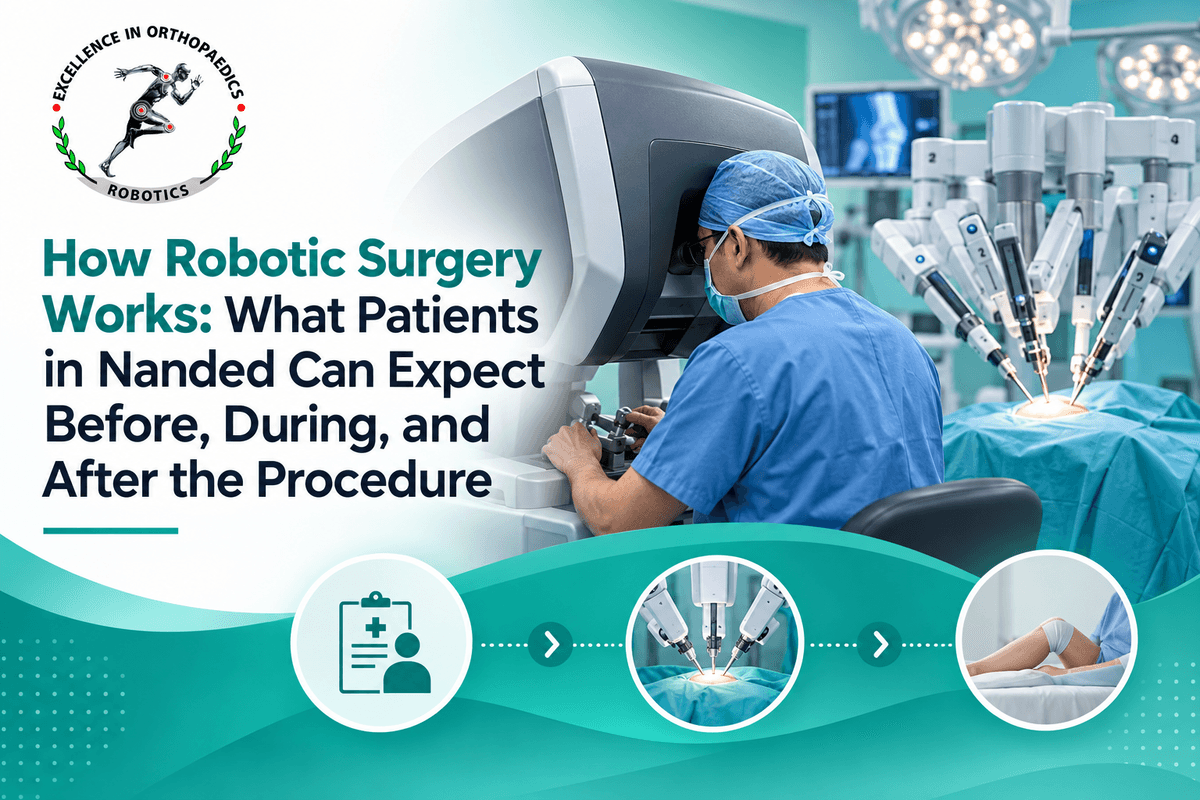
How Robotic Surgery Works: What Patients in Nanded Can Expect Before, During, and After the Procedure
The Fear Behind "Robot Surgery" Is Real — But So Is the Relief
You've just been told you need surgery. Your doctor mentions robotic surgery, and your mind immediately fills with questions: Is a robot actually operating on me? Will I feel it? Is this safe? Why can't I find a robotic surgeon near Nanded who can explain this properly?
You're not alone in feeling this way. Research shows that the primary factors driving fear and anxiety in robotic surgery patients include a lack of knowledge and understanding about the procedure, uncertainty about surgical outcomes, and a feeling of loss of control. For patients across Nanded and the Marathwada region, these fears are compounded by limited access to clear, locally relevant information about what robotic surgery actually involves — from the day you walk into the clinic to the day you return to normal life.
This guide, from Dr. Rangdhal — Nanded's dedicated robotic surgeon — answers every question you're afraid to ask.
What Is Robotic Surgery, and Is the Robot Actually Doing the Operation?
Let's answer the biggest misconception first: No, a robot does not independently perform your surgery. You are always under the full control of your surgeon.
Robotic surgery is a type of minimally invasive surgery that uses robotic arms to perform surgical procedures, with the surgeon controlling those robotic arms from a console, using hand and foot controls to manipulate instruments with precision. Think of it as the surgeon's hands being extended, refined, and amplified inside your body.
The robotic system can reach places a surgeon's hands traditionally cannot in open and laparoscopic surgery, and is also free from the normal tremors that come from a surgeon's hand. This means greater accuracy, especially in complex, tight anatomical spaces.
Robotic surgery offers several advantages over traditional surgery, including greater precision, enhanced dexterity, and improved visualization. Robotic platforms allow surgeons to perform complex procedures through tiny incisions, reducing blood loss, less pain, and enabling faster patient recovery.
Most robotic procedures take two to three hours under general anesthesia. Patients typically experience only minimal blood loss, and blood transfusions are rarely needed.
In short: a highly trained robotic surgeon is doing the operation — the robotic system just gives them superhuman precision to do it better.
How Dr. Rangdhal's Practice in Nanded Makes Robotic Surgery Accessible
For years, patients in Nanded who needed complex minimally invasive surgery had no choice but to travel to Hyderabad, Pune, or Mumbai — spending money on transport, accommodation, and time away from family, all while managing post-surgical recovery far from home.
Dr. Rangdhal has changed that. As a dedicated robotic surgeon serving Nanded and the surrounding Marathwada region, Dr. Rangdhal brings world-class surgical precision to your own city. The practice is designed around one principle: every patient deserves a full, honest understanding of their procedure before, during, and after surgery.
Here's what the patient journey looks like at Dr. Rangdhal's clinic:
Before Surgery: You'll receive a thorough pre-operative consultation where your condition, surgical plan, and expected outcomes are explained in plain language — in Marathi, Hindi, or English, whichever you're most comfortable with. Preoperative anxiety is commonly influenced by fear of invasive procedures, concerns about anesthesia, and uncertainty about postoperative recovery — so every question is addressed before you ever enter the operating room.
During Surgery: You'll be under general anesthesia. On the day of surgery, you'll be escorted to a surgery preparation area, helped into a gown, given warm blankets, and made comfortable before an IV line is inserted for hydration, anesthesia, and medications. You will feel nothing.
After Surgery: When you wake from anesthesia, you'll be in a comfortable recovery area. You may notice your incisions are small, and you will have less pain than you would with traditional surgery. Depending on the condition treated, patients often only spend one night in the hospital.
Patients from Nanded, Latur, Hingoli, Parbhani, and the Nanded-Waghala municipal area can all consult Dr. Rangdhal without the burden of long-distance travel.
The Evidence: Why Robotic Surgery Is a Safe, Proven Choice
This is not experimental medicine. Robotic surgery has a robust, growing evidence base — including data from India specifically.
According to data from the NCBI, the success rate of robotic surgery is around 94% to 100% in India. There are far fewer complications in robotic surgery compared to conventional approaches, the duration of operations has decreased, and robotic surgery ensures significantly less blood loss — making success rates even higher.
A multi-institutional study from India showed how quickly robotic approaches have been accepted for surgical procedures, with the number of cases operated between 2016 and 2021 nearly doubling compared to the period between 2011 and 2015.
From Indian tertiary care data on robotic cholecystectomy: only one intraoperative complication occurred (1.58%), no conversions to open surgery were required, there were no postoperative bile duct injuries or surgical site infections, and the mean hospital stay was under two days. Pain scores decreased significantly within the first 48 hours post-surgery, and quality of life scores improved steadily by postoperative days 3, 14, and 30, with no readmissions.
With proper patient selection, robotic-assisted surgery is safe and feasible even in low-to-middle-income countries. For patients in Nanded — a city that has historically had to look outward for superspecialty care — having a credentialed robotic surgeon locally is a significant, life-changing development.
Frequently Asked Questions (FAQ)
1. Is robotic surgery safe? What are the risks compared to open surgery?
Yes, robotic surgery is safe and backed by strong clinical evidence. Many reviews have found that robotic-assisted surgery is generally associated with lower complication rates and faster postoperative recovery compared to both open and laparoscopic surgery. Risks exist with any surgical procedure, but because robotic surgery gives the surgeon a clear and precise view and better dexterity, it typically results in less pain, fewer complications, and quicker recovery time for the patient. Your surgeon will assess your individual health profile before recommending the approach.
2. How long is the recovery time after robotic surgery?
Recovery is significantly faster than with traditional open surgery. Research demonstrates that robotic-assisted surgery leads to faster recovery, fewer post-surgical complications, and reduced postoperative pain compared to conventional approaches. Most patients are discharged within one to two days, and most are able to return to their normal activities within a few days to a week. Your specific recovery timeline will depend on the type of procedure and your overall health.
3. Will I feel any pain during or after robotic surgery?
You will be under general anesthesia during the procedure and will feel nothing. After surgery, patients typically experience much less pain than with conventional open incision procedures. Most patients can be managed with simple analgesia rather than strong opioid painkillers. Pain typically diminishes rapidly in the days following surgery.
4. Do patients in Nanded really need to travel to Pune or Hyderabad for robotic surgery?
No — not anymore. With Dr. Rangdhal's robotic surgery practice now serving Nanded and the wider Marathwada region, patients from Nanded, Nanded-Waghala, Latur, Parbhani, and Hingoli can access the same standard of minimally invasive surgical care that was previously only available in larger metro cities. Indian hospitals, including those located in Tier-2 and Tier-3 cities, are increasingly adopting robotic surgery — and Nanded is no exception. Consult locally, recover at home, and stay close to your family.
5. What types of surgeries can be performed robotically?
Robotic surgery covers a broad and growing range of procedures. Robotic surgery can be used to treat a wide range of conditions affecting the digestive system, bladder, prostate, reproductive organs, and more. Common robotic procedures include hernia repair, gallbladder removal, colorectal surgery, urological procedures, and gynaecological surgeries. Robotic-assisted surgery is particularly well-suited for complex surgical procedures that require high precision. During your consultation with Dr. Rangdhal in Nanded, you'll receive a clear assessment of whether robotic surgery is the right approach for your specific condition.
If you or a loved one has been advised surgery and want to understand your options with a trusted robotic surgeon in Nanded, book a consultation with Dr. Rangdhal today.
Visit Us
Visit Dr Rangdhal for trusted, compassionate care. We're here for you and your family.
Dr Rangdhal
Nanded
Phone: +91 96652 24447
Website: www.drrangdalroboticsurgeon.com
Google Maps: https://maps.app.goo.gl/gxyHDsg87t94vm6E7
Email: drsushil@drrangdalroboticsurgeon.com